
Angus CochraneBBC Scotland
 Reuters
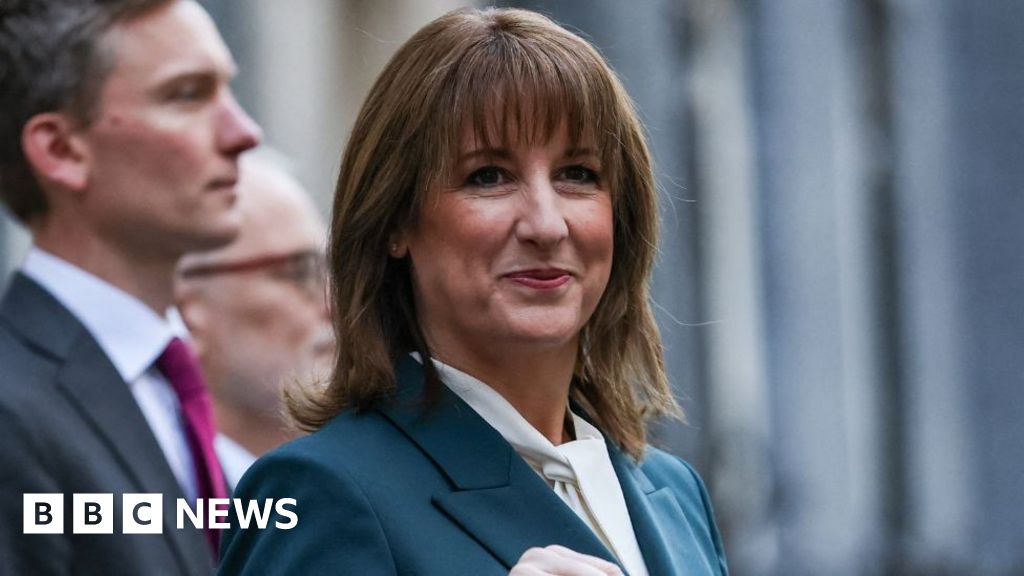
Scotland will receive an extra £820m over the next five years as a result of the UK Budget, Chancellor Rachel Reeves has announced.
The Labour minister also pledged to scrap the the two-child benefits cap for Universal Credit claimants.
However, her plans will lead to more Scots paying income tax and National Insurance, as well as introducing levies on pension contributions.
Labour ministers are also set to loosen rules on new oil and gas exploration in the North Sea.
Announcing the extra funding for the Scottish government, Reeves said: “The benefits of investment and growth must be built and felt in every part of the United Kingdom.”
She described her tax changes as “pragmatic”.
Ahead of the Budget, the Scottish government had urged the chancellor to invest in public services and support people with the cost of living.
SNP Westminster leader Stephen Flynn said: “Yet again, families are being forced to pay the price for Labour Party failure with billions of pounds of cuts, tax hikes and rising costs hammering households and public services.”
The Scottish Conservatives criticised the UK government for raising taxes, while the Scottish Greens called the Budget a “missed opportunity”.
While some of the tax and spending decisions in the UK Budget do not directly affect Scotland – which has control in devolved areas such as health and education – many of the measures do.
The announcements that directly impact Scots include:
- The extension of a freeze on National Insurance thresholds for an extra three years beyond 2028
- The removal of a National Insurance exemption for salary-sacrificed pension contributions above an annual £2,000 threshold, from April 2029
- Cuts to green levies on energy bills to bring down household energy bills
- A freeze on fuel duty to be extended until September 2026
- A new mileage-based charge on electric and plug-in hybrid cars from April 2028
- A 6.1% increase in the standard allowance of Universal Credit
Ahead of the Budget, the chancellor had already announced an increase in the minimum wage and an extension of the sugar tax – both of which apply across the UK.
Reeves also confirmed £20m of investment for Inchgreen dry dock in Inverclyde, and a further £20m for the redevelopment of Kirkcaldy town centre and seafront, which is to begin next year.
Income tax freeze – and how it affects Scots
Reeves announced that a freeze on UK income tax thresholds will be extended until 2030.
Scotland sets its own income tax rates, but changes to thresholds do have an impact north of the border.
Holyrood ministers have used their devolved powers to set up a distinct system, with seven bands to the UK’s four.
The Scottish government is in charge of setting the thresholds for all of these bands except for the lowest one, the personal allowance, which is the level at which people start paying tax.
Extending the freeze on this threshold means that as salaries rise over time, more people reach an income level at which they start paying tax.
As well as directly affecting the take-home pay of Scots through the personal allowance, the change will also lead to an automatic deduction from the block grant that the Treasury pays to the Scottish government.
This is because the UK government is able to deduct funds from the block grant that it estimates it would have received if tax-raising powers were not devolved to Holyrood.
Frozen thresholds mean more taxpayers paying higher rates in other parts of the UK, and a higher theoretical tax take for the UK government in Scotland – and therefore a bigger deduction from the block grant.
Another of the key Budget announcements was on the two-child benefits cap, which means that parents can only claim Universal Credit or tax credits for their first two children, with a few exemptions.
Introduced by the Conservative party to cut costs, the cap has so far been kept in place by Sir Keir Starmer’s Labour administration.
But Reeves confirmed that the cap on Universal Credit would be lifted from April. She said her government did “not believe that the solution to a broken welfare system is to punish the most vulnerable children”.

 Getty Images
The chancellor added that her government would removed the “vile, dehumanising and cruel” rape clause.
The Scottish government has pledged to mitigate the cap north of the border by offering a new benefit – the Two-Child Limit Payment – to affected families from March next year.
The UK government’s decision to scrap the cap is expected to save the Scottish government about £155m in the next financial year.
However, the Fraser of Allander Institute, an independent economic research unit at the University of Strathclyde, has estimated that scrapping the cap could cost the Scottish government an additional £34m in 2026-27 because it would mean more people were eligible for devolved benefits.
Taken together, that would leave Holyrood with a saving of £121m.
First Minister John Swinney has pledged to use any savings from the removal of the cap to tackle child poverty.
Responding to the UK Budget, Scottish Labour leader Anas Sarwar said: “This budget means child poverty down, energy bills down, wages up and austerity rejected.
“Thousands of Scottish children lifted out of poverty, £150 off energy bills, £300 for those most in need, increases in the living wage and £820m extra for the Scottish government.”
Scottish Conservative leader Russell Findlay said: “Labour’s £26bn tax bombshell continues their sustained attack on hard-pressed workers and businesses.”
Scottish Green co-leader Ross Greer said: “This was a badly missed opportunity and a lesson in mediocrity. Labour promised little and delivered even less.”
When is the Scottish Budget?
The block grant paid to the Scottish government by the UK Treasury is adjusted relative to what is spent on devolved services like health and education in England.
The calculation to decide Scotland’s share is based on population and some other factors.
The Scottish government will announce its own tax and spending plans on 13 January – a month later than usual because the UK Budget was pushed back to November.
Coming just four months before May’s Holyrood election, it is expected to be a key staging post in the battle for votes.


