Brian WheelerPolitical reporter
 House of Commons
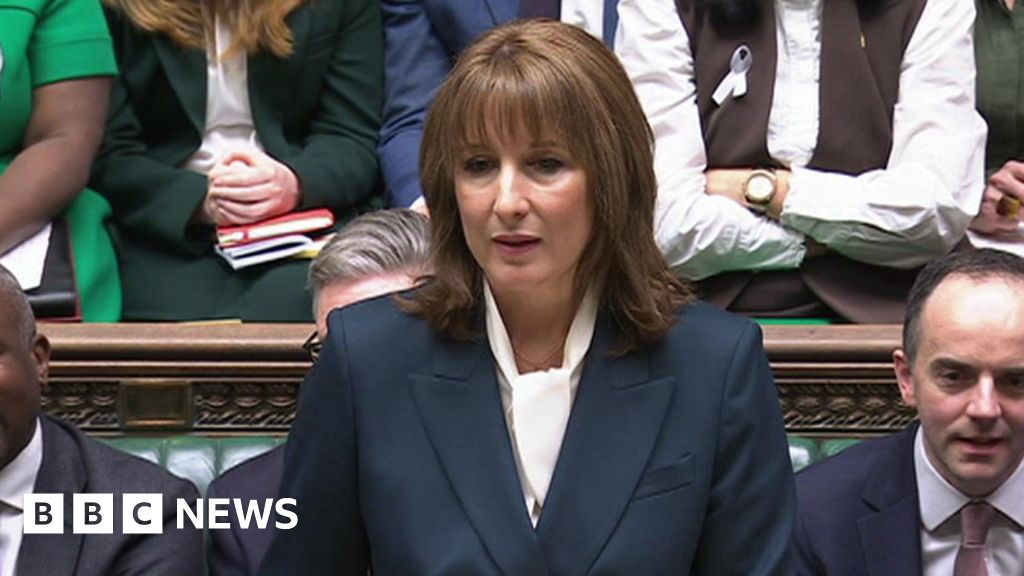
Rachel Reeves has announced £26bn in tax increases aimed at shoring up the UK economy in what is being seen as a make-or-break Budget for the government.
The chancellor has extended a freeze on income tax and National Insurance thresholds, meaning millions of workers will be dragged into paying higher rates as their wages increase.
She also targeted owners of homes worth more than £2m with a “mansion tax” – and hit owners of electric and plug-in hybrid cars with a new mileage-based charge.
The chancellor sought to limit the impact of tax rises with measures aimed at easing the cost of living, and she scrapped the two-child benefit cap in a move that will go down well with Labour MPs.
She told MPs her choices meant there would be no “reckless borrowing” or a return to austerity and that NHS waiting lists and government debt would continue to be cut.
But Conservative leader Kemi Badenoch branded her “the country’s worst ever chancellor” and said she should resign for breaking the promise she made in her first Budget last year not to come back for more tax.
In the run up to this year’s Budget, Reeves decided against increasing the main rate of income tax – and is instead extending a freeze on thresholds, something she said last year would “hurt working people”.
“I know that maintaining these thresholds is a decision that will affect working people, I said that last year and I won’t pretend otherwise now,” she told MPs.
“I am asking everyone to make a contribution. But I can keep that contribution as low as possible because I will make further reforms to our tax system today to make it fairer.”
Chaos erupted minutes before Reeves began her speech, when the government’s spending watchdog the Office For Budget Responsibility (OBR), accidentally published key details of what was in it.
The OBR blamed a “technical error” and said it was launching an investigation into how the forecast document appeared on its website, which the Conservatives said may be a criminal offence as it contained market-sensitive information.
Reeves told MPs the accidental OBR leak was “deeply disappointing and a serious error on their part”.
In its forecasts, the OBR said the measures in the Budget add up to £26bn in tax rises in 2029-30, which will bring the UK’s tax take to an all-time high of 38% of national income in 2030-31.
Key tax increases include:
- Freezing income tax and National Insurance thresholds for a further three years until April 2031 in England, Wales and Northern Ireland
- Owners of properties valued over £2m will pay a recurring annual charge of £2,500, rising to £7,500 for properties of £5m, on top of their council tax bill from April 2028
- New tax of 3p per mile for electric cars and 1.5p for plug-in hybrids
- Increasing duty on online betting from 15% to 25%
- A £2,000 a year cap on the amount workers can put into their pensions under “salary sacrifice” schemes without paying National Insurance – at the moment there is no limit
- Amount under-65s can put into cash Isas (Individual Savings Accounts) capped at £12,000 a year, with the rest of the £20,000 annual allowance reserved for investments.
With Labour trailing in opinion polls and Sir Keir Starmer facing questions about his leadership, Reeves had been under pressure to deliver a Budget that went down well with Labour MPs and voters worried about the cost of living, without spooking the financial markets.
It contains measures that will please Labour MPs – such as ending the two-child benefit cap, which Reeves said would lift 450,000 children out of poverty.
Despite the name, it does not affect child benefit – but relates to tax credits and universal credit payments if you have or had a third or subsequent child born after 6 April 2017.
Reeves said the policy, introduced by the previous Conservative government, had “made almost no difference to the size of families” and had not cut the welfare bill “but it’s kids who have paid the price”.
Reeves was also under pressure to reduce the cost of government debt and increase the buffer she has against future economic shocks, known as headroom.
She told MPs debt would continue to fall as a share of national income and the amount of headroom will double to £21.7bn.
“I said there would be no return to austerity, and I meant it,” she told MPs.
“This Budget will maintain our investment in our economy and our National Health Service. I said I would cut the cost of living, and I meant it.
“This Budget will bring down inflation and provide immediate relief for families. I said that I would cut debt and borrowing, and I meant it.
“Because of this Budget, borrowing will fall as a share of GDP in every year of the forecast.”
Measures announced before the Budget included: