Health Secretary Wes Streeting has backed calls for a debate on banning under 16-year-olds from social media.
Speaking to BBC Radio 4’s Today programme, he said the government had to “get the balance right” and “protect young people from the harm”.
In December, Australia introduced a law requiring social media platforms to block under-16s from having accounts with their sites and privately, many Labour MPs and officials have said they expect that the UK government to follow their example.
Next week, the House of Lords is set to vote on proposals for a ban, which, if passed, could see pressure grow on the government.
Last week, the Conservatives announced they would block under-16s from social media platforms, as well as prohibiting smartphones in schools, if they won the next election.
Tory party leader Kemi Badenoch said “addictive” social media apps “correlates quite strongly” with a rise in mental health problems among young people.
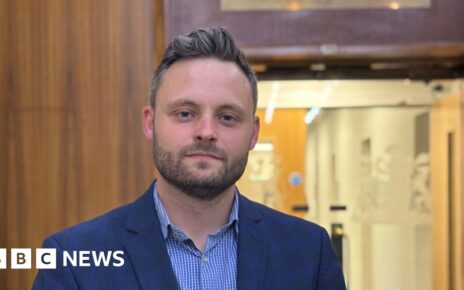
Labour Greater Manchester Mayor Andy Burnham has said he agrees with “a lot of what Kemi Badenoch is saying” on social media use.
Earlier this week, Meta announced it had blocked about 500,000 accounts on its sites including Facebook and Instagram during its first week of compliance with the new law in Australia.
The UK government has said it will be monitoring how the Australian ban works.
Some Labour MPs and officials have privately expressed frustration that Badenoch and Burnham have been able to get ahead of the government on the issue.
“It’s where we will inevitably end up. It’s what the public and parents want. I don’t know what’s keeping us so long,” one senior government source said.
This week’s confrontation with X over Grok AI, on which Downing Street is claiming “vindication”, might embolden the government to have another battle with the big technology companies.
The issue could come to a head next week, with the House of Lords likely to vote on an amendment to the Children’s Wellbeing and Schools Bill which would prevent under-16s from accessing social media.
It has been tabled by Lord Nash, a Conservative former education minister, but is jointly-sponsored by Baroness Benjamin, the Liberal Democrat peer and former children’s TV presenter; the Labour peer Baroness Berger and Baroness Cass, an independent member of the House of Lords, who is a paediatrician.
Those involved in the amendment are optimistic it will pass.
If it does, the House of Commons would have to hold a binding vote on the issue in the next few months.
Asked if the government would implement a ban, Streeting said he was “really glad” the prime minister had “encouraged debate” on the subject.
“This is not just a debate worthy of our time but a debate past time.
“This has been the conversation at school gates, in parent WhatsApp groups and Facebook groups.”
He said social media could create “greater connections and a sense of belonging” but also came with risks including the “harm of addling the developing mind of young people”.
“And then there’s really sinister, extreme stuff,” he added citing exposure to pornography, grooming or violent extremism.
“We’ve got to think about traditional approaches in the modern setting.
“No one would dispute when I was growing up that being able to use tools like hammers or a saw was a good skill set for us to learn as young people.
“What would never happen was a nursery or primary school child being given a box of nails and left unattended with it. That’s kind of what we have done with mobile phones.”
The Molly Rose Foundation, a suicide prevention charity, has expressed concerns about the “unintended consequences of bans” arguing that they risk “pushing harm to unregulated areas rather than making products safe by design for children”.
Andy Burrows, chief executive of the foundation, said: “Government should respond to overwhelming calls from parents for decisive action by fixing regulation with evidence-based solutions, not simplistic and populist calls for social media bans that would risk causing more harm than good.
“They should immediately publish the review into smartphones and social media that they have been sitting on for six months so parents can see what the evidence actually says, and government can act swiftly and decisively to protect children by doing what’s right not simply what’s easy.”
A spokesperson for the Department of Science, Innovation and Technology said the study would be “published in due course” adding: “We are considering next steps in light of its conclusions.”
“We are committed to keeping children safe online and will continue to develop policy informed by the best available evidence.”